
Introduction
The Hidden Work Beneath the Surface
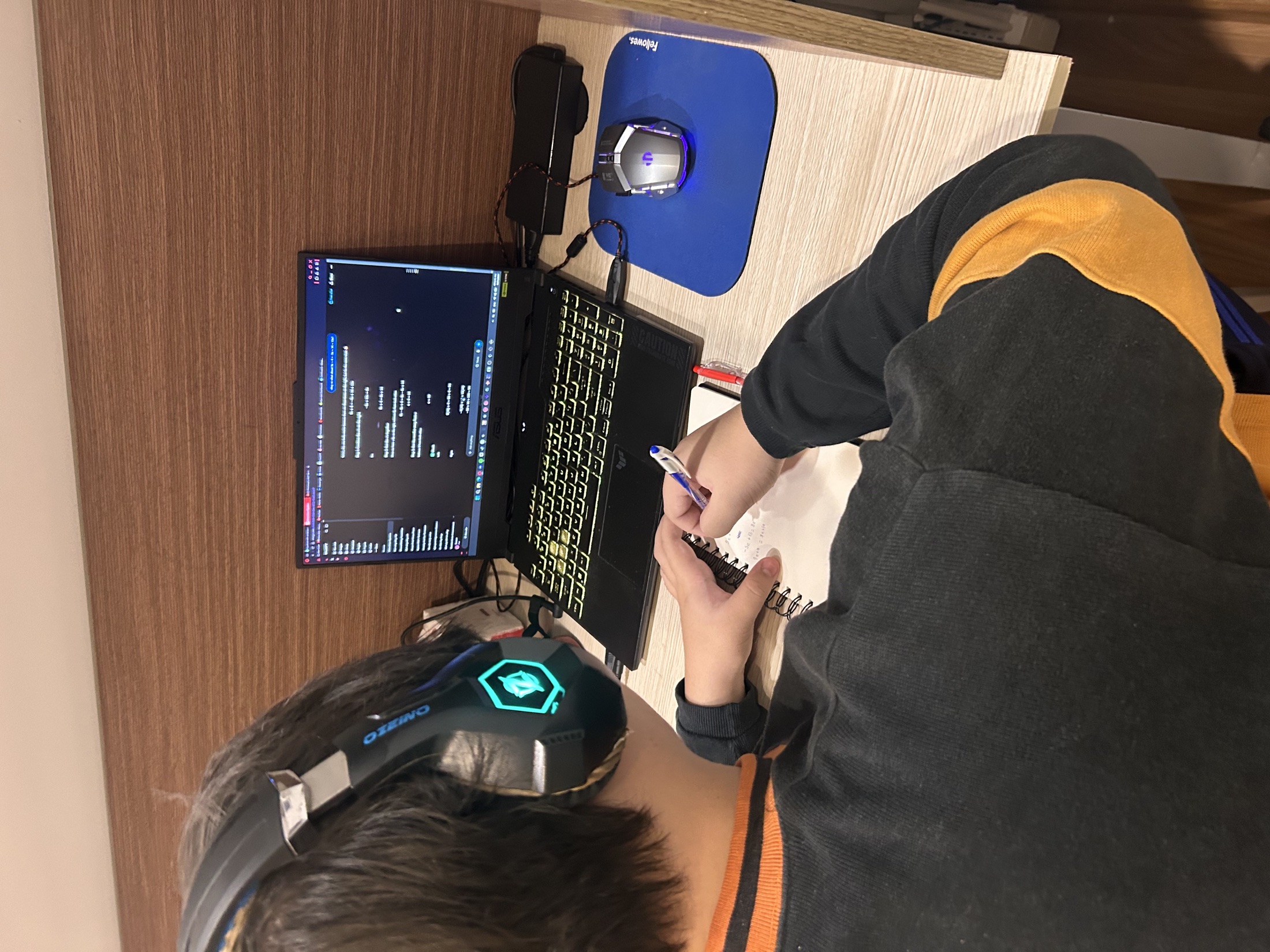
Some autistic students move through secondary school appearing confident, capable, and socially integrated. They keep up with their work, communicate well, and seem to cope. Yet they may be working far harder than anyone realises simply to get through the day.
Teachers may see calmness where there is exhaustion, independence where there is quiet confusion, or disengagement where a student is trying not to reveal that they are struggling. Behind the outward appearance of competence, the student may be consciously interpreting social situations, managing sensory overload, organising competing demands, and hiding signs of anxiety or uncertainty.
The aim is not to lower expectations. It is to remove unnecessary barriers so that autistic students can participate, learn, and belong without using so much of their energy simply trying to appear fine.
Understanding autism
What is Neurodiversity?
Neurodiversity is the simple but powerful idea that human brains vary. Not everyone perceives, processes, learns, or socialises in the same way, and these differences are part of natural human variation. Within this framework, conditions such as autism, ADHD, dyslexia, and dyspraxia are not framed exclusively as disabilities, but as neurological profiles with distinct strengths and needs.
In a secondary school environment, neurodiversity matters because teenagers are expected to manage increasingly complex academic and social demands. Students who think differently may bring remarkable strengths, including analytical thinking, honesty, pattern recognition, and creativity, but they may also face difficulties that peers do not. Recognising neurodiversity helps us shift away from interpreting behaviours as unwillingness, laziness, or defiance, and towards understanding them as natural differences in cognition and social processing.
It also aligns with the double empathy problem, which highlights that misunderstandings between neurotypical people and students affected by autism are mutual rather than one-sided. Students are not struggling because they fail to understand others; teachers and peers may also misread them. Acknowledging this makes the classroom more equitable and humane.
Understanding autism
What is Autism?
Autism in secondary-school students often presents very differently from the picture many teachers learned in their early training. Cognitively able students affected by autism may have strong language skills, good academic performance, and the ability to converse socially, all of which can obscure their underlying needs.
A helpful starting point is the formal diagnostic criteria. According to the Diagnostic and Statistical Manual of Mental Disorders, Fifth Edition (DSM-5), autism is defined by:
“Persistent deficits in social communication and social interaction across multiple contexts,” including difficulties with social-emotional reciprocity, nonverbal communication, and developing, maintaining, and understanding relationships.
“Restricted, repetitive patterns of behaviour, interests, or activities,” such as repetitive movements, insistence on sameness, highly restricted interests, or unusual sensory responses.
These criteria are intentionally broad because autism presents so differently from one person to the next. Behind these formal descriptions are the practical differences teachers see daily: students who work hard to interpret facial expressions, struggle with conversational flow, depend on predictable routines, or manage sensory environments that feel far more intense than they appear.
Autism as a Spectrum
Autism is best understood as a spectrum that includes individuals who require substantial support in daily living, as well as those who are cognitively able, academically capable, and relatively independent.
The familiar language of “low functioning” and “high functioning” is somewhat simplistic. It compresses a wide range of profiles into a single line and can obscure how uneven some students’ skills may be. A student might excel academically while struggling profoundly with executive functioning or social interpretation. Nonetheless, the spectrum is still a useful broad description, and it reflects what we see in practice: students affected by autism vary widely in both strengths and support needs.
Where Secondary-School Students Typically Fall
Many young people affected by autism in mainstream secondary schools are verbal, academically able, and often capable of participating in classroom life with relative independence. However, this outward competence can conceal the cognitive and emotional load they carry.
Historically, much of the research and intervention literature has focused on individuals with higher support needs. There has been comparatively less academic attention on the experiences and challenges of cognitively able autistic adolescents, even though their difficulties can be significant but less visible. This contributes to a misunderstanding teachers often encounter: students who appear highly capable, but who nonetheless struggle, burn out, or become socially isolated despite their apparent competence.
How These Characteristics Affect Day-to-Day School Life
Three areas can make the school day far more demanding than it appears.
Social Communication
Students may need to consciously interpret facial expressions, follow rapid conversational shifts, and recognise subtle changes in tone or context. Everyday interactions that happen intuitively for others can require considerable concentration and energy.
Reliance on Routines
Predictability can provide a sense of stability in a world that feels uncertain. A room switch, a new seating plan, or altered instructions may cause significant stress, not because the student is being deliberately inflexible, but because an expected structure has suddenly changed.
Sensory Processing
A classroom that feels ordinary to most students may feel painfully bright, noisy, or overwhelming to a student affected by autism. Managing this sensory load alongside academic and social demands can make the school day far more exhausting than it appears.
Autism in school
How Autism Shows Up in School
Autism presents differently from one person to the next, and the way it shows up in school can vary across classrooms, subjects, teachers, and situations. No two students affected by autism are identical, and their needs can shift depending on the level of structure, the social demands, the sensory environment, and the expectations placed on them.
What follows are patterns we consistently encounter in our work at Learning Strategies and through our collaborations with schools in Vietnam and the wider region. These are the learning and social differences that, in our experience, most often affect secondary-school students, particularly those who are cognitively able and working hard to manage the demands of a busy, complex environment.
Learning Differences in Practice
Inference
Students affected by autism are often very strong with factual information but may find it difficult to interpret meaning beneath the surface. When tasks require abstract thinking, including understanding themes, motives, implied meanings, or nuanced concepts, they may become stuck, not because of ability, but because the cognitive leap from concrete facts to inferred meaning feels uncertain or ambiguous. This can lead to frustration or disengagement, especially in subjects such as Literature or Humanities, where interpretation is central.
Flexibility
Flexibility is a cornerstone of the modern classroom: group work, shifting tasks, transitions, timetable changes, and unexpected variations in routine. For learners affected by autism, these changes can be taxing. Even small, everyday adjustments, such as a substitute teacher, a modified lesson plan, or an unstructured group activity, can disrupt their sense of stability. This is not resistance for its own sake. It reflects how much they rely on predictability to manage the world around them and how destabilising unpredictability can be.
Executive Functioning
Executive functioning challenges often hide behind strong verbal or academic skills. A student may write beautifully or solve complex problems but still lose track of materials, forget homework, miss deadlines, or find it hard to plan multi-step tasks. Teachers sometimes misinterpret this as carelessness or lack of motivation, but it is usually a neurological difficulty with sequencing, prioritising, and managing time. In secondary school, where independence is expected, this gap can widen quickly unless support is put in place.
Motivation
Motivation in students affected by autism is tightly connected to clarity, purpose, and meaning. If an activity feels illogical, overly abstract, or lacking a clear rationale, engagement tends to drop. These learners often need explicit explanations of why a task matters or how it connects to broader learning goals. When the “why” is missing, the work can feel arbitrary, which leads to avoidance, anxiety, or apparent disinterest, even when the student is capable of succeeding.
Support-Seeking
Many students affected by autism struggle to ask for help, even when they desperately need it. Some fear looking incompetent; others simply do not recognise that they are stuck until they are overwhelmed. As a result, teachers may only discover the difficulty when a student shuts down, rushes through work incorrectly, or withdraws.
Social Differences in Practice
Emotional Intelligence
Students affected by autism may find it challenging to read facial expressions, tone of voice, or emotional nuance in their peers. This can lead to misunderstandings or delayed responses in conversation. Because they process emotion cognitively rather than intuitively, these interactions require effort rather than coming naturally, which can be exhausting over a long school day.
Joint Attention
Activities that rely on shared focus, including collaborative projects, group experiments, or even casual peer interactions, can feel difficult. These students may not naturally align their attention with others or may not express shared enthusiasm in expected ways. This can leave them appearing uninterested or disconnected when the underlying difficulty is actually in coordinating attention socially.
Inferencing in Social Contexts
Just as academic inference can be hard, social inference can be even more complex. Jokes, sarcasm, implied meaning, and subtle shifts in social dynamics can be confusing. Adolescents often communicate indirectly, and this indirectness can be a major source of stress for students affected by autism. They may misinterpret harmless comments as criticism or overlook cues that signal a change in mood or intention.
Problem-Solving and Conflict Resolution
Conflict requires emotional regulation, perspective-taking, and rapid interpretation of social cues, all areas that can be challenging. Students affected by autism may become rigid in disagreements or struggle to negotiate and compromise. They may also inadvertently escalate situations by responding literally or bluntly in moments that require tact.
Theory of Mind
While many cognitively able students affected by autism can understand others’ perspectives, the process is often more deliberate and effortful. They may need extra time to process what someone else might be thinking or feeling, especially when emotions run high. This can make complex social situations, including friendship tensions, group dynamics, and peer disagreements, especially overwhelming.
The hidden effort
Masking: The Hidden Effort Behind the School Day
Masking is one of the most important, and often the most misunderstood, features of how autism shows up in secondary schools. In fact, it is frequently in the effort to mask that we see the deepest challenges associated with autism emerge. The behaviours teachers typically notice in overt presentations, including rigidity, overwhelm, confusion, or sensory stress, may be almost entirely absent in these students. Instead, the challenges take the form of everything the student is working to hide.
For many students affected by autism, school success depends on suppressing their natural behaviours, copying peers, and performing an appearance of “typical” social understanding. Research shows that camouflaging is especially common among cognitively able adolescents and is strongly associated with increased anxiety, internalising symptoms, and emotional exhaustion.
This means that while the previous section described the learning and social differences commonly associated with autism, a student who masks may show almost none of these on the surface. Their presentation may be subtle, polished, or seemingly well adjusted, and yet internally the student is navigating enormous cognitive and emotional demands.
Masking is therefore not about what teachers see; it is about what teachers are not able to see.
The outward smoothness often covers substantial hidden effort, including managing sensory overload, interpreting social cues manually, rehearsing responses, or suppressing anxiety. This invisible work can accumulate into fatigue, burnout, and heightened mental health risk.
Examples such as hiding emotions, avoiding failure, and refusing help are not merely behaviours themselves, but clues. They are often the signs teachers can learn to recognise in order to identify students who are quietly camouflaging their differences. By becoming more attuned to these subtle indicators, teachers can better support students who may otherwise go unnoticed.
Forms of Masking in School
Hiding Emotions or Sensory Overload
Students may maintain a calm, neutral, or even cheerful expression while experiencing anxiety, confusion, or sensory distress. A learner may push through the school day without reacting visibly, only to crash emotionally at home. The absence of outward distress should therefore never be assumed to reflect an absence of struggle.
Avoiding Failure
Many students affected by autism manage their anxiety by appearing extremely controlled or perfectionistic. They may avoid trying new tasks, keep answers safely vague, or withdraw from participation to prevent making mistakes. This can look like disengagement, but it is often an attempt to protect themselves from perceived social or academic exposure.
Not Asking for Help
Students who mask frequently avoid seeking assistance because doing so risks revealing vulnerability or difference. They may sit silently through confusion, hand in incomplete work, or attempt to “look busy” rather than show uncertainty. Teachers may only realise the depth of difficulty when the student is already overwhelmed.
Scripting
Some students rehearse social sentences, phrases, or responses in advance to ensure they appear fluent or socially competent. This can make interactions seem polished but can also drain emotional energy. When situations deviate from what they expected, these students may freeze, become overly formal, or withdraw.
Dominating Social Interactions
A smaller number of students cope by controlling the conversational flow through talking rapidly, overexplaining, or steering topics to familiar ground. This is often misinterpreted as confidence or verbosity when it is actually a strategy to avoid unpredictable social demands.
Masking in Girls
Masking is especially common, and often extraordinarily sophisticated, among girls affected by autism. Research shows that autistic girls and young women engage in higher rates of camouflaging than boys, often in response to social expectations and pressure to fit in.
Girls may develop advanced observational skills that allow them to mimic peer behaviour with considerable accuracy. They may consciously copy gestures, facial expressions, conversational patterns, or friendship dynamics. Because diagnostic frameworks were historically based predominantly on male presentations, many girls go unrecognised.
Teachers may see a friendly, enthusiastic, and cooperative student who appears to be thriving, yet the student may be sustaining that presentation through intense internal regulation. This kind of camouflaging is associated with higher levels of anxiety, depression, and identity confusion in girls and young women.
This level of masking can lead to significant internal exhaustion. Many girls experience emotional meltdowns or shutdowns after school, withdrawing for long periods because the effort required to hold themselves together during the day is overwhelming.
Why Masking Matters for Teachers
Masking hides the very differences that might otherwise signal the need for support. A student who appears confident may actually be the student who is closest to burnout. The challenge for teachers is therefore not spotting the loud, obvious signs of autism, but learning to recognise the silent, subtle ones.
By understanding that masking is common, especially among cognitively able and socially motivated students, we become far better equipped to interpret behaviour compassionately, offer appropriate adjustments, and create an environment where students do not feel the pressure to hide so much of themselves.
Moving into action
Guidance for Teachers
Supporting students affected by autism in secondary school is complex work. The range of possible needs, interventions, and accommodations is vast, and each learner brings a completely individualised profile of strengths and challenges. There is no single roadmap or checklist that captures the full picture of what is required. Every situation must be tailored, contextualised, and shaped around the student in question.
Because of this, we strongly encourage schools to approach this area collaboratively. Teachers should not be expected to manage these complexities alone. Effective support almost always involves working closely with specialists, including external clinicians, school counsellors, learning support coordinators, SEN departments, or any member of a school’s Well-Being Team who has experience in neurodevelopmental differences.
What matters most is problem-solving together. Good decision-making relies on gathering data from all the contexts in which the student functions: different subjects, different teachers, unstructured spaces, home, and peer interactions. A rounded understanding ensures that interventions are used consistently and pervasively, rather than in isolated pockets.
With that in mind, the guidelines below are not exhaustive. They are simply core principles we often find ourselves returning to when advising teachers. These general recommendations provide a strong starting point for supporting students affected by autism in the classroom, including those whose needs may be hidden by masking.
Please also refer back to “How Autism Shows Up in School” above for more specific guidance on issues that may arise in the classroom. The “Strategies to try” button on each card opens a side panel with practical advice for that particular area.
Guideline 1
Assume Good Intentions
When a student affected by autism behaves in a way that feels abrupt, inappropriate, or disproportionately intense, it is easy, almost intuitive, for adults to assume negative intent. A sharp tone of voice, a flat affect, a literal comment, or a blunt refusal can easily be misinterpreted as rudeness, defiance, or disrespect.
This is often where interactions begin to escalate unnecessarily. One misread behaviour leads to a misread response, which leads to frustration on both sides. This is exactly the kind of dynamic captured in the double empathy problem: the student does not fully understand the teacher’s perspective, and the teacher does not fully understand the student’s internal experience. With both sides misreading each other’s intentions, the situation can spiral rapidly.
Most students affected by autism are not trying to be difficult; they are trying to cope.
Assuming good intentions breaks this cycle before it begins. A behaviour that looks deliberately provocative is often a sign of overwhelm, misinterpretation, sensory strain, or an attempt to regain control.
A teacher who can regulate their own emotions in the moment, pause, recognise their own frustration, and re-enter the interaction with curiosity rather than judgement creates the space needed for meaningful communication. This mindset sets the tone for every other recommendation that follows.
Guideline 2
Be Clear and Concrete
Clarity is not just helpful; it is essential. Students affected by autism often rely on precise, unambiguous instructions because they may struggle with inference, or interpreting implied meaning, and with executive functioning, including organising, planning, and prioritising.
Vague Expectations
“Be more responsible.”
“Participate better.”
“Stay focused.”
Clear Concrete Expectations
“Write three bullet points.”
“Ask one question during group work.”
“Underline the key terms in the paragraph.”
Vague expectations can leave students unsure what is actually required. Concrete expectations remove ambiguity and give students a clear target they can work towards. This reduces anxiety, preserves dignity, and supports independence. It not only helps the student succeed academically, but also prevents misunderstandings that could otherwise trigger distress.
Guideline 3
Anticipate Problems Before They Happen
Many challenges associated with autism become far easier to manage when anticipated rather than reacted to. But making sure everyone has the information they need takes considerable coordination. A student may work with many teachers, and a teacher who does not yet know the student’s needs may inadvertently place them in a difficult situation. This does not mean teachers are not trying. It shows how hard it can be to establish and maintain a shared understanding across a busy school.
This is where teamwork and collaboration become essential. A well-informed team shares observations, identifies patterns, and anticipates common difficulties. That shared knowledge needs regular updating as the year progresses, students’ needs change, or different teachers become involved. Checking that the people working with a student have current information should be an ongoing part of support, not a one-time handover.
Common Pressure Points
When the whole team anticipates these issues, support becomes proactive rather than reactive. Once a student has already melted down or withdrawn, the damage is often done. At that point, we are managing consequences rather than protecting the student’s wellbeing.
The goal of collaboration is therefore not just consistency; it is pre-emptive care.
A coordinated team prevents fires rather than constantly being forced to put them out.
Guideline 4
Teach and Reflect at Every Opportunity
Some of the most valuable learning moments for students affected by autism happen after the problem, not during it. When a student is dysregulated, overwhelmed, or confused, teaching rarely works. Once they have de-escalated, however, micro-conversations can become powerful tools for growth.
These conversations work best when approached like a gentle counselling exercise. Rather than accusing or reprimanding, the teacher breaks down the situation step by step.
A Reflection Pathway
Students affected by autism often do not intuitively understand social and emotional causality: how one person’s behaviour triggers another’s feelings, or how intentions differ from outcomes. Reflective conversations help make these invisible processes visible.
Ask Before Offering Advice
“I have a couple of ideas. Would you like to hear them?”
Crucially, teachers should ask permission before offering advice. This reduces defensiveness, preserves trust, demonstrates respect, and encourages genuine engagement.
Teaching in these moments is not about correcting mistakes. It is about building insight, strengthening relationships, and helping the student feel understood rather than judged.
Final thoughts
Closing Reflections
Many students affected by autism work incredibly hard to meet the social and cognitive expectations of school. The more competent they appear, the easier it is to underestimate the energy required to maintain that appearance. By understanding neurodiversity and responding thoughtfully to the signs of masking, we can help these learners feel genuinely safe, understood, and valued.
When teachers provide clarity, predictability, empathy, and space for authenticity, students affected by autism can participate without fear, not because they have learned to hide themselves, but because they no longer have to.
Further reading
Useful Resources and Further Reading
Masking
The National Autistic Society explains what masking is, why autistic people may mask, how it can affect wellbeing, and how schools and other environments can reduce the pressure to hide autistic characteristics.
Open resource →Autism and Communication
An accessible explanation of autistic communication differences and the double empathy problem, with guidance on supporting communication across autistic and non-autistic people.
Open resource →Teaching Autistic Students in Secondary School
Practical guidance for secondary-school teachers, including relationships, written communication, organisation, sensory needs, technology, and the pressure students may experience to conform or mask.
Open resource →AET Schools Standards Framework
A whole-school framework from the Autism Education Trust for reviewing teaching, relationships, learning environments, staff knowledge, and provision for autistic students aged 5 to 16.
Open resource →Removing Educational Barriers in Australian Schools for Autistic Students
An evidence-based review from Autism CRC examining the barriers autistic students encounter and the conditions that help them flourish in educational environments.
Open resource →